Book list
A ten-minute chapter book tryout
A library or living-room tryout with one colorful diary and one illustrated adventure.
Where to start
Use a short sample to learn which story your child wants to return to. A book can be a good choice for reading together even when your child wants help with most of the words.
Put out two books that offer different kinds of reading
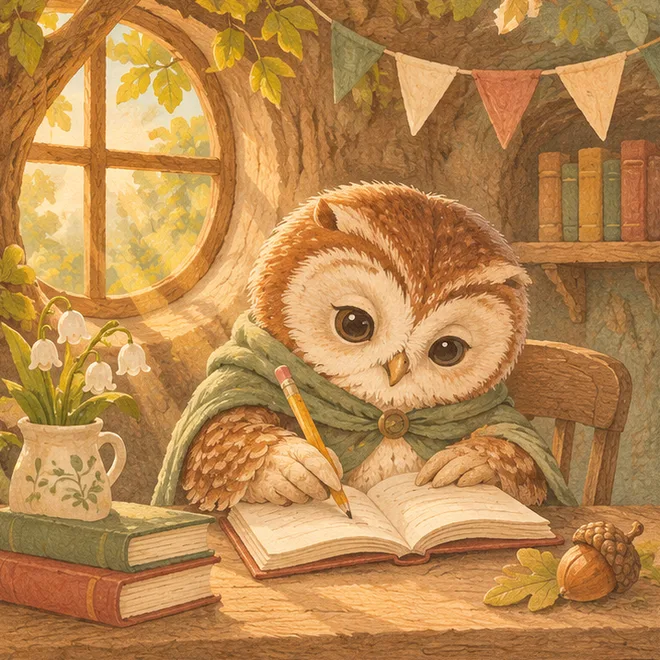
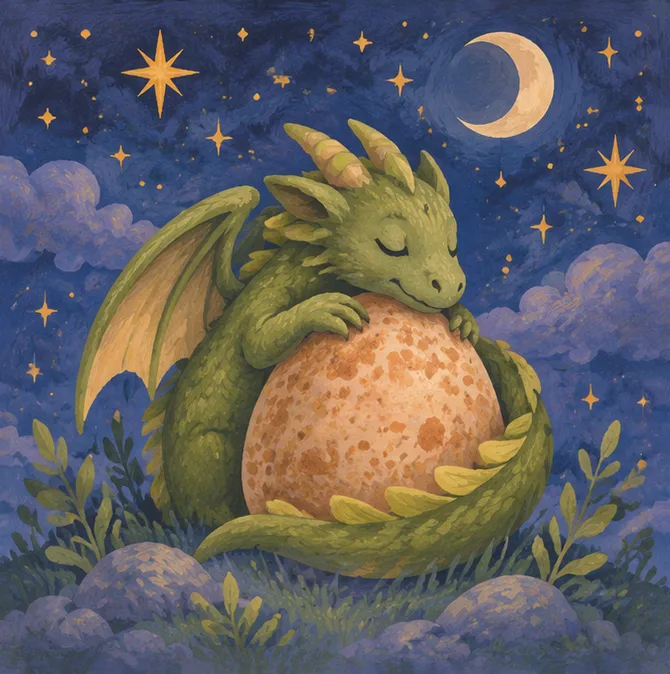
For this tryout, use Eva’s Treetop Festival and Rise of the Earth Dragon. Eva has a festival to organize, and she describes the work in a diary full of color pictures. Drake has a dragon to get to know. His story moves through short prose chapters with black-and-white scenes. Show the two covers and ask which situation sounds promising, then open both to see how the actual pages look.
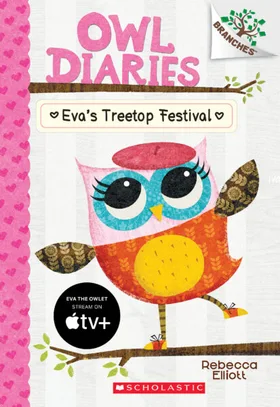
Owl Diaries #1
Eva’s Treetop Festival
By Rebecca Elliott
Ages 5–7 · US grades 1–2 · 80 pages
Edition details
- Paperback · ISBN 9780545683623 · Published · 80 pages
- Library binding · ISBN 9780545683630 · Published · 80 pages
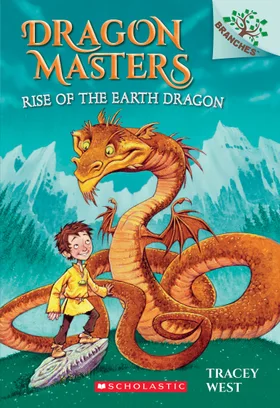
Read together long enough to meet the main problem
Read the opening stretch aloud and let your child follow the picture. In Eva’s book, pause when they know what she wants to set up. In Drake’s, notice when a farm day becomes a trip to the castle. Your reader can take a line or a speech balloon if they want to try. Give them a moment to use the pictures for context before supplying an unfamiliar name or word.
Keep the stopping place flexible. If you spend the first few minutes sorting out how a diary page works, stay with a single entry. If the castle scene has your reader’s attention, keep going until there is enough of the story for them to say why they want to return.
Watch for a reason to come back
Set the book down at a natural break and ask where you ought to start when you pick it up again. A child might want to remember a scene they found funny, or point out which character they want to see next. That response tells you whether the story has caught their attention. A child who finishes the sample comfortably may still prefer the other book’s setting.
For the next library trip, choose one book for the kind of reading your family actually wants that week. If you will read aloud, an intriguing plot can carry more of the choice. For solo reading, give extra weight to whether your reader could stay with the page without frequent help. Try the second sample later when there is time to enjoy the difference.
Keep exploring
All reading guides-
Book list
First chapter books for picture-book lovers
Three ways to keep the pictures close as a story begins to span several sittings.
-
Book close-up
How Eva’s Treetop Festival tells its story
A closer look at Eva’s diary voice, her friendship with Lucy, and a big project at owl school.
-
Book close-up
Is Rise of the Earth Dragon a good first chapter book?
See how Drake’s first dragon adventure reads, where a new reader might get stuck, and what to try in chapter one.